
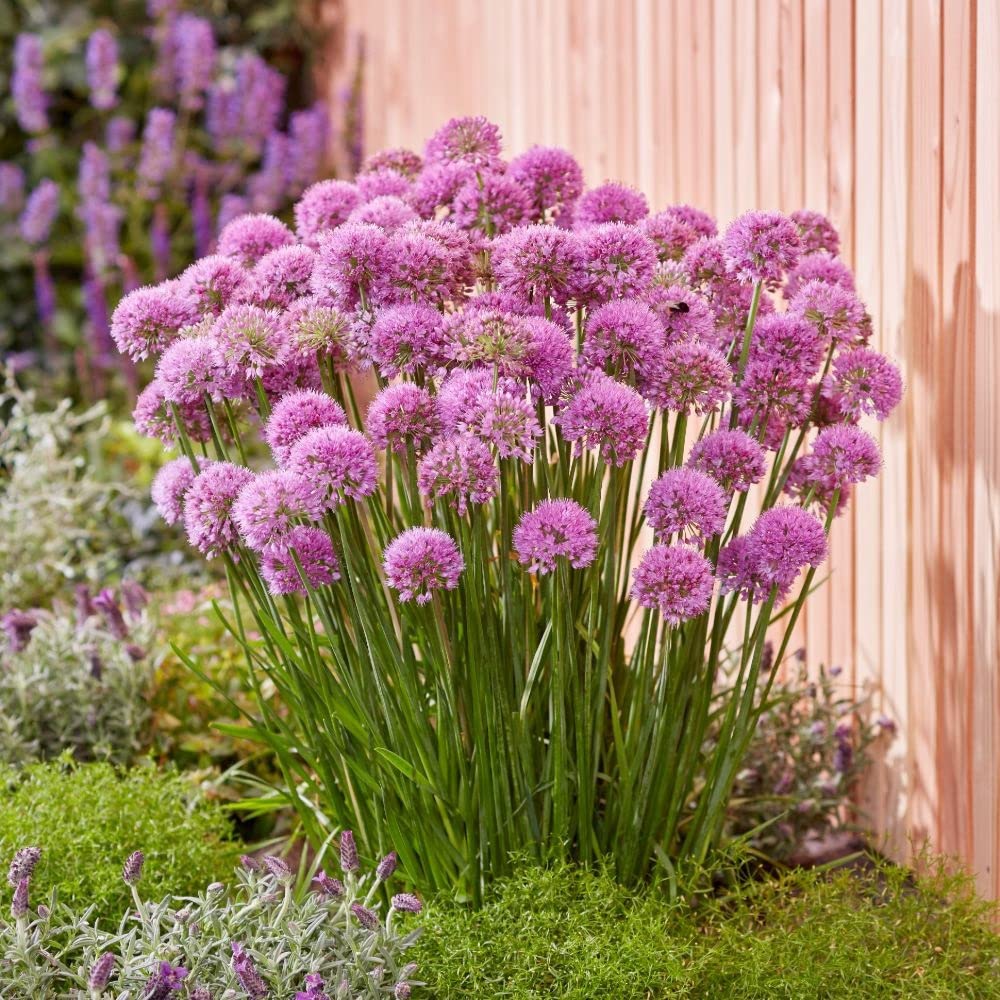
Allium is that late-spring show-off that makes a bed look finished. Big round flower heads float above everything else like little fireworks on sticks. The blooms pull in bees, the stems stay upright, and the shape holds for weeks. Even after flowering, the seed heads still look sharp, especially mixed in with grasses or summer perennials. Gardeners lean on allium because it’s tough, clean-looking, and critters usually leave it alone.
Michigan sits in USDA Zones 4a through 6b on the 2023 USDA map, see the >USDA Plant Hardiness Zone Map
Most ornamental alliums are listed around Zones 4–10, which puts them comfortably in range for Michigan gardens.
Some specific types get sold with slightly different zone ratings depending on variety and seller, so the simple rule is: get bulbs rated to Zone 4 or colder if you want them to come back reliably up north and in windy, open yards.
Varieties include: Pink Giant (pictured), Mini Milli, Blue Eddy, and Globe Master. There are many other varieties that will fit your needs.

559 Orchard Lake Rd.
Pontiac, Michigan 48341